Brief Overview:
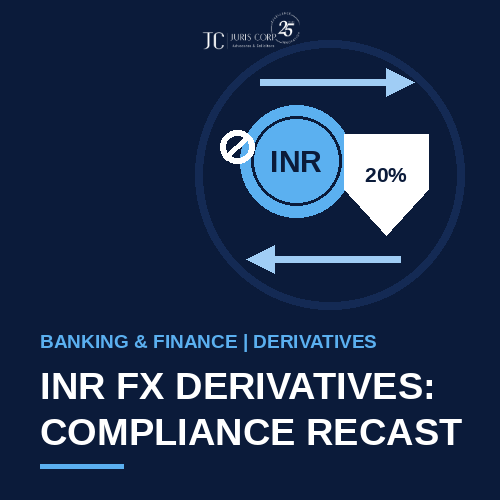
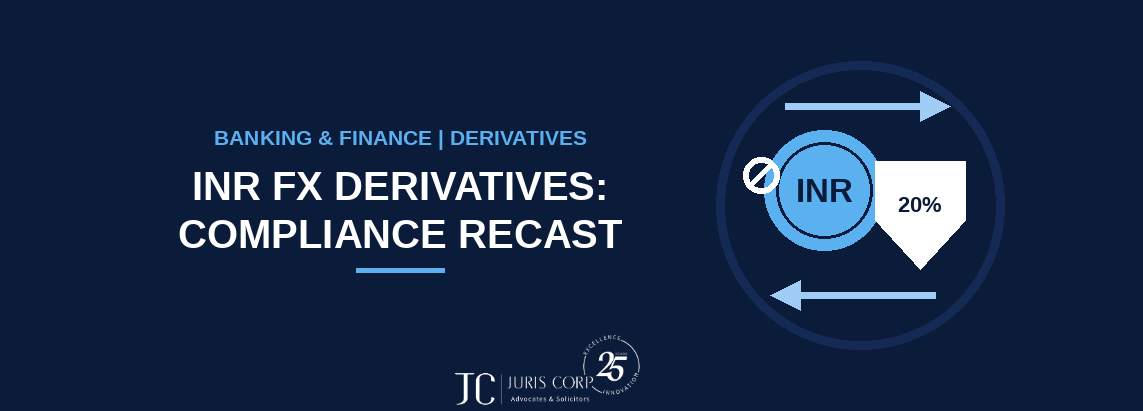
INR FX derivative transactions will be subject to tighter operational, documentation and capital requirements. The measures restrict the rebooking of cancelled contracts, reduce the threshold for hedging without proof of underlying exposure and introduce a new Foreign Exchange Risk Reserve (FERR).
Technical Details:
Key Highlights
1) Cancelled INR FX derivatives cannot be rebooked – Whether deliverable or non-deliverable, and across Authorised Dealers. This restriction was first introduced in April 2026, withdrawn later that month, and has now been reinstated. Rollovers at maturity remain permitted.
2) The no-proof threshold drops sharply – From USD 100 million to USD 5 million.
3) A new undertaking is mandatory – Users must confirm that the same exposure is not hedged with another Authorised Dealer.
4) A 20% cash reserve will apply – Under the new FERR, Authorised Dealers must reserve 20% of the INR notional for specified INR FX derivatives exceeding USD 2 million equivalent.
Takeaways:
Banks should immediately identify affected products, configure systems to prevent rebooking, strengthen exposure checks, update client documentation and put in place processes to obtain and retain the required undertaking. They should also establish FERR monitoring and reserve processes, assess the resulting liquidity, funding and pricing impact, and update internal policies and controls.
For further details, please see:
RBI Announces Regulatory Measures for the Foreign Exchange Market
For any queries/clarifications, please feel free to ping us and we will be happy to chat: