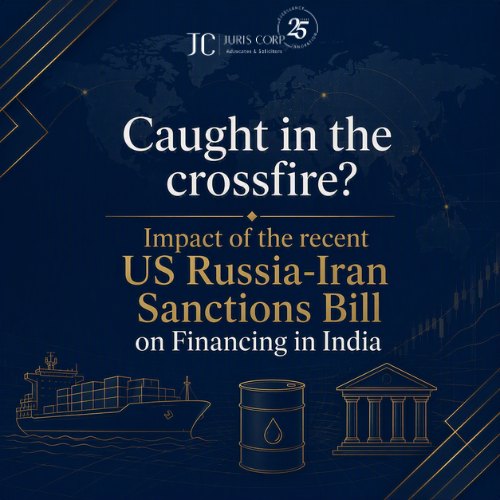
The recent bill passed by the US Senate (Lindsey O. Graham Sanctioning Russia and Iran Act of 2026) (“Bill”) expands the Russia-focused sanctions measure and includes Iran-related sanctions.
The Bill restricts dealings involving Russian financial institutions, sovereign debt, investments, energy activities and uranium imports, and extends the Iran Sanctions Act of 1996, till 2031, without secondary tariffs on countries purchasing Iranian oil or gas. While the Bill is not yet in force and remains subject to completion of the US legislative process, what could this mean for the Indian financing market?
- Lenders may be subject to enhanced sanctions scrutiny where they are involved in conducting transactions with sanctioned Russian banks.
- Imports, exports, project or commodity trade finance, shipping finance, trade finance secured by cargoes, financing shipping companies, may necessitate enhanced assessment of sanctions-related risks in relation to financing transactions involved around such trade.
- Lenders may additionally have to evaluate and conduct diligence of sanctions exposure, counterparties, vessel usage in shipping finance, and payment channels.
While potential implications may be inevitable, this warrants a broader assessment and examination on whether your documentation contains adequate safeguards for sanctions-related representations and warranties, information covenants, and sanctions-triggered events of default?
Our Sanctions, Trade Controls & Cross-Border Regulatory Advisory practice advises businesses and financial institutions on sanctions risk assessments, transaction structuring, contractual safeguards, due diligence and response strategy.
Have a sanctions-related query or would like to discuss how these developments may affect your business? Please feel free to reach out—we would be happy to chat.
Authors:

Disclaimer:
This article is intended for informational purposes only and does not constitute a legal opinion or advice. Readers are requested to seek formal legal advice prior to acting upon any of the information provided herein. This article is not intended to address the circumstances of any particular individual or corporate body. There can be no assurance that the judicial / quasi-judicial authorities may not take a position contrary to the views mentioned herein.