Brief Overview:
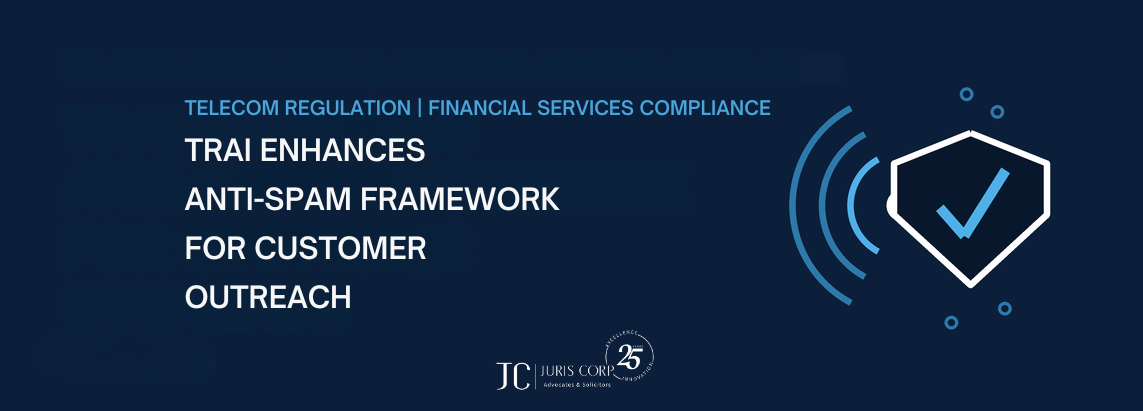
Customer outreach through calls, SMS and automated tools is moving into a more closely monitored regime. Following stakeholder consultation earlier this year, the latest amendments to India’s commercial communications framework aim to reduce spam while preserving legitimate, consent-based customer communication. For banks, NBFCs, insurers, fintechs and other regulated financial entities, the changes are particularly relevant because service alerts, fraud warnings, payment reminders, onboarding calls, collections and marketing often rely on high-volume telecom channels and third-party vendors.
Technical Details:
Key Highlights
1) Technology-led monitoring is now formalised: Telecom operators will use technology-led checks and information-sharing to identify suspected spam, which may affect entities with high-volume customer communication flows.
2) Repeat flags may trigger action: If multiple numbers linked to a sender are flagged within a short period, telecom operators may initiate further verification, restrict services or disconnect numbers in serious cases.
3) Automated calls must be declared and may attract charges: Robo, pre-recorded or automated calls must be disclosed in advance; certain automated calls may also attract a termination charge of up to INR 0.05 per minute.
4) Consent, inquiries and templates must be traceable: Businesses should be able to evidence customer consent or inquiries and maintain stronger controls over sender identities, headers and message templates.
5) Vendor oversight becomes more important: Financial-sector clients using call centres, recovery vendors or marketing partners should tighten contractual and operational controls.
Takeaways:
Financial-regulatory clients should review their customer communication frameworks, especially where calls, SMS or automated tools are used for onboarding, servicing, collections, fraud alerts, payment reminders or marketing. The immediate focus should be on ensuring that communications can be linked to valid consent, a recorded customer inquiry or another permitted basis, and that vendor contracts clearly allocate responsibility for compliance, misuse, record-keeping, template controls and escalation of customer complaints.
For further details, please see:
Curbing Unsolicited Commercial Communications through Technology-Driven Enforcement
For any queries/clarifications, please feel free to ping us and we will be happy to chat: